
 0
0
 0
0
Modern vehicles combine mechanical parts, electronic controls, sensors, polymers, coatings, and precision components. Each part may face different risks from heat, moisture, vibration, chemicals, particles, or repeated operation.
Automotive testing helps manufacturers evaluate whether components remain suitable for their intended function. Laboratory results can support design decisions, supplier control, production monitoring, and investigations when a part does not perform as expected.
Why Safety-Critical Components Need Testing
A small defect in a safety-related component can affect the entire vehicle system. Testing helps detect material variation, contamination, corrosion, wear, and production defects early. It ensures components meet specifications and perform reliably under real operating conditions.
Testing Mechanical and Fluid-System Components
Mechanical parts used in fuel, brake, cooling, lubrication, and hydraulic systems may contain narrow channels and moving surfaces. Particles, incorrect materials, or surface damage can influence flow and component operation.
| Component Concern | Suitable Testing Context |
| Particles inside channels | Technical cleanliness testing |
| Surface wear | Microscopy or SEM analysis |
| Material variation | Elemental or material analysis |
| Corrosion deposits | Surface and chemical analysis |
| Damaged coating | Cross-section and adhesion evaluation |
| Unknown residue | FTIR, EDX, or chromatography |
| Cracking | Fracture and failure analysis |
Cleanliness evaluation measures particle count, size, mass, or composition, while failure analysis identifies causes of damage.
Evaluating Automotive Electronics
Vehicles rely on sensors, circuit boards, cameras, control units, connectors, and modules, sensitive to moisture and contamination
- Ionic contamination on PCB surfaces
- Corrosion on terminals or connectors
- Particles near sensitive contacts
- Residues from flux or cleaning chemicals
- Delamination in electronic materials
- Coating and encapsulation defects
- Restricted substances
- Unknown deposits
- Heat-damaged areas
- Inconsistent electrical performance
Different techniques provide varied insights: Ion Chromatography measures ionic residues, SEM and EDX analyze microstructure and elements, FTIR identifies organic compounds, and cross-section analysis reveals internal layers, cracks, voids, and interface damage.
Automotive Testing for EV Components
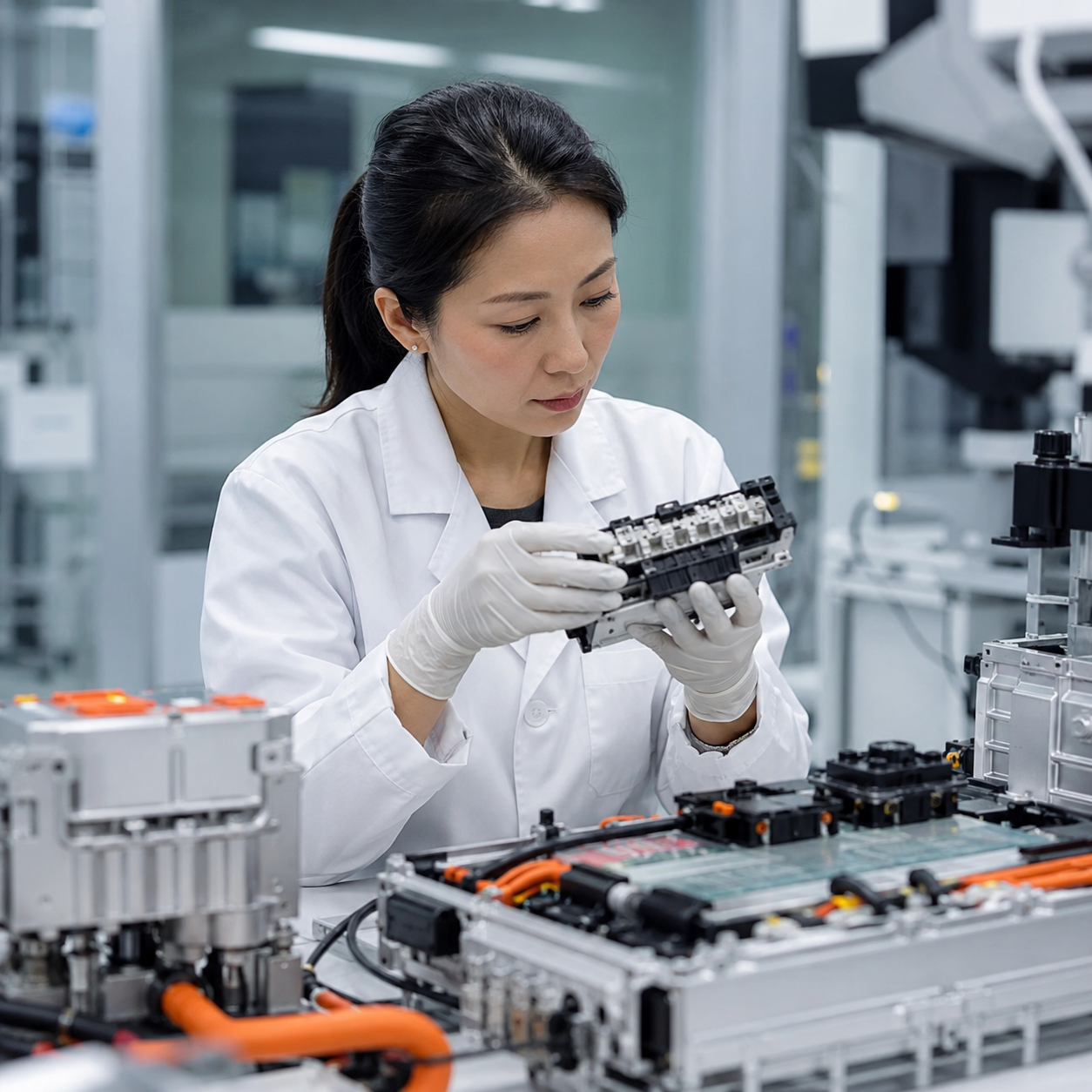
Electric vehicles integrate electrical, thermal, chemical, and mechanical demands across batteries, power electronics, cooling systems, connectors, insulation, and precision assemblies. A focused automotive testing programme supports evaluation of materials, cleanliness, contamination, corrosion, coatings, and failure modes to ensure components perform reliably under real operating conditions.
EV components should be assessed based on function and environment, as cooling parts may need cleanliness checks while power modules require surface and chemical analysis.
Testing After Process or Supplier Changes
Changing a supplier, material, cleaning chemical, coating, machine, or production location may introduce variation even when the component design remains unchanged. Comparison testing helps determine impacts on cleanliness, composition, corrosion, and performance.
Planning Samples for Automotive Laboratory Analysis
The lab understand question before selecting methods to avoid unnecessary tests and missing evidence.
- Component name and purpose
- Material information
- Production stage
- Customer or OEM specification
- Observed issue
- Suspected process
- Environmental or service conditions
- Supplier and batch information
- Previous test data
- Normal comparison samples
- Required reporting units
- Permission for destructive testing
When only one failed component is available, analysis order matters; inspect and document before destructive testing.
Automotive Testing Services in Malaysia
Malaysia supports automotive and EV supply chains across electronics, machining, polymers, coatings, and metal parts. Alstesting automotive testing services in Malaysia provides testing services including cleanliness, chemical, and failure analysis to help manufacturers evaluate components, manage risks, and support production decisions.


